
পাথরকুচি (BRYOPHYLLUM PINNATUM)

ORIGIN
পাথরকুচি (Bryophyllum pinnatum / Kalanchoe pinnata) is a succulent medicinal plant originally native to Madagascar. Over centuries it spread naturally—and through human cultivation—to tropical and subtropical regions including South Asia (Bangladesh, India), Africa, the Caribbean, and Southeast Asia. It is widely recognized for producing small plantlets along the leaf margins, a rare and fascinating reproductive ability.
TAXONOMY
- Kingdom: Plantae
- Clade: Angiosperms
- Order: Saxifragales
- Family: Crassulaceae
- Genus: Kalanchoe
- Species: Kalanchoe pinnata (synonym: Bryophyllum pinnatum)
EVOLUTION
পাথরকুচি has evolved with specialized adaptations that allow it to thrive in dry, sunny environments:
- CAM Photosynthesis (Crassulacean Acid Metabolism): Opens stomata at night to reduce water loss.
- Succulence: Stores water in thick leaves and stems for drought protection.
- Vegetative Reproduction: Produces new plantlets on leaf edges, giving it an evolutionary advantage in colonizing harsh habitats.
- Chemical Defense: Evolved secondary metabolites (bufadienolides and flavonoids) to deter herbivores and pathogens.
These evolutionary traits make the plant both remarkable and resilient.
DESCRIPTION
- Growth Habit: Succulent, perennial herb, 1–2 meters tall.
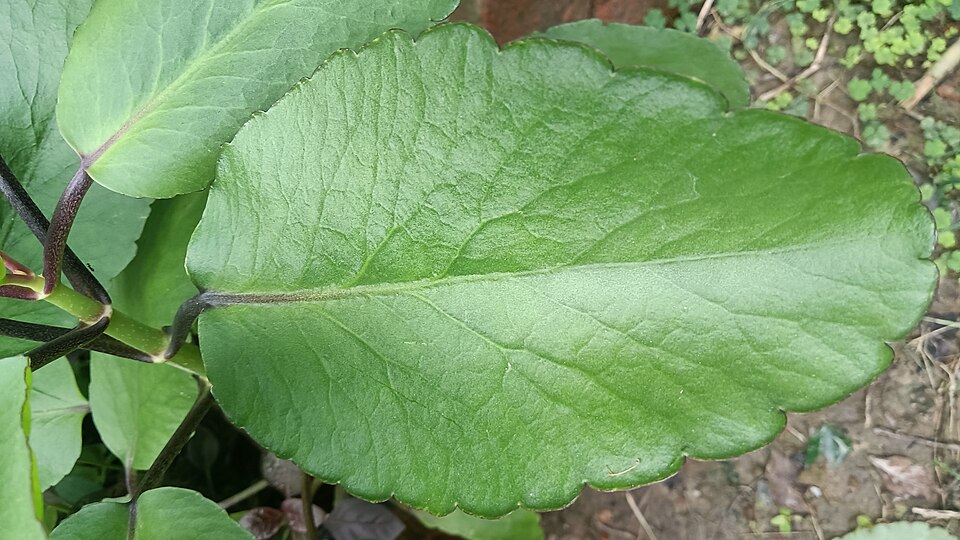
- Leaves: Thick, fleshy, bright green, opposite arrangement; scalloped (toothed) edges produce baby plantlets.
- Stem: Smooth, water-rich, and soft to the touch.
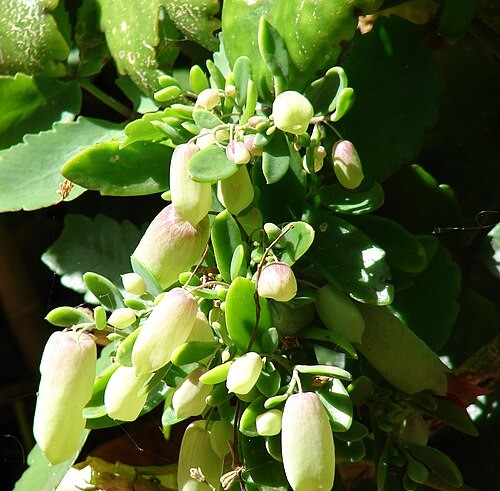
- Flowers: Bell-shaped, drooping clusters; green, pink, or reddish.
- Fruits: Small dry follicles containing numerous tiny seeds.
- Notable Feature: Ability to grow plantlets from leaf margins that root and grow into new plants.
ECOLOGY
- Habitat: Dry hillsides, rocky terrains, coastal areas, abandoned lands, and garden edges.
- Climate: Thrives in tropical/subtropical climates with moderate to high sunlight.
- Adaptations: Performs CAM photosynthesis to conserve moisture. Can withstand long drought periods. Spreads easily due to leaf plantlets, sometimes becoming invasive.
- Pollination: Usually by insects; however, seed-based reproduction is less common than vegetative propagation.
CULTIVATION
- Soil: Well-drained sandy or loamy soil; tolerates nutrient-poor soil.
- Light: Prefers bright sunlight; tolerates partial shade.
- Watering: Low to moderate; overwatering can cause root rot.
- Temperature: Ideal range 18–30°C; sensitive to frost.
- Propagation: Leaf plantlets (most common method), Stem cuttings, Seeds
- Pests/Diseases: Occasionally attacked by aphids, fungal infections, and mealybugs.
TRADITIONAL USES
পাথরকুচি is widely used in traditional medicine systems including Ayurveda, Siddha, Unani, and folk practices.
Common uses in traditional medicine:
- Treating kidney stones
- Healing wounds and cuts
- Reducing fever
- Relieving cough, cold, and asthma
- Treating burns and insect bites
- Reducing stomach pain and indigestion
- Applying leaf juice for earache
- Soothing skin inflammation
- Treating headaches (warm leaves applied to forehead)
The plant is often known as the “miracle leaf” because of its wide medicinal applicability.
MEDICINAL USES
পাথরকুচি contains a range of active phytochemicals including:
- Flavonoids
- Triterpenoids
- Phenolic compounds
- Steroids
- Bufadienolides (bioactive cardiac glycosides)
- Organic acids
- Alkaloids
Key therapeutic activities:
- Anti-inflammatory: Reduces swelling and pain.
- Antimicrobial: Fights bacteria and fungi.
- Antiviral: Some extracts inhibit viral replication.
- Antioxidant: Helps fight oxidative stress.
- Wound healing: Enhances collagen production, speeds up healing.
- Diuretic: Helps dissolve/expel kidney stones.
- Antidiabetic: Helps regulate blood glucose.
- Anticancer potential: Cytotoxic effects observed in lab studies.
- Antihypertensive: Helps lower blood pressure.
RESEARCH
Modern scientific research supports many traditional uses:
- Kidney Stone Treatment:Clinical and animal studies show reduction of calcium oxalate crystals and diuretic benefits.
- Wound Healing:Increases collagen synthesis and cell regeneration.
- Anti-inflammatory Properties:Strong due to presence of flavonoids and triterpenoids.
- Anti-cancer Studies:Bufadienolides show cytotoxic effects on certain cancer cell lines.
- Uterine Relaxant Effects:Patharkuchi extract is used in some countries (e.g., Germany) to help manage preterm labor under medical supervision.
Ongoing research focuses on isolating and safely harnessing its bioactive compounds.
BIOLOGY
Photosynthesis Type: CAM – opens stomata at night to reduce water loss.
- Water Storage: Leaves and stems store water internally for survival.
- Reproduction:Vegetative: Baby plantlets on leaf margins
- Sexual: Seeds (less common)
- Defense Mechanisms: Produces bitter and toxic compounds (bufadienolides) to deter animals and insects.
TOXICITY
Although highly medicinal, Patharkuchi contains compounds that can be toxic if used improperly.
Human Toxicity:
- High intake may cause:
- Vomiting
- Diarrhea
- Irregular heartbeat
- Dizziness
- Should be used cautiously during pregnancy, as some compounds affect uterine muscles.
Animal Toxicity:
- Toxic to cattle, goats, and sheep when consumed in large quantities.
- Contains cardiac glycosides, similar to digitalis (foxglove), which may cause heart-related poisoning.
Proper dosage and professional supervision are strongly advised.
CONCLUSION
পাথরকুচি (Bryophyllum pinnatum) is an exceptional medicinal plant with unique reproduction, strong therapeutic properties, and important roles in traditional medicine. It is easy to grow and widely used for kidney stones, wound healing, inflammation reduction, and respiratory issues. Despite its benefits, it must be used responsibly because of potential toxicity.