
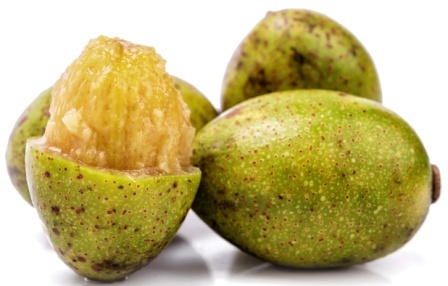
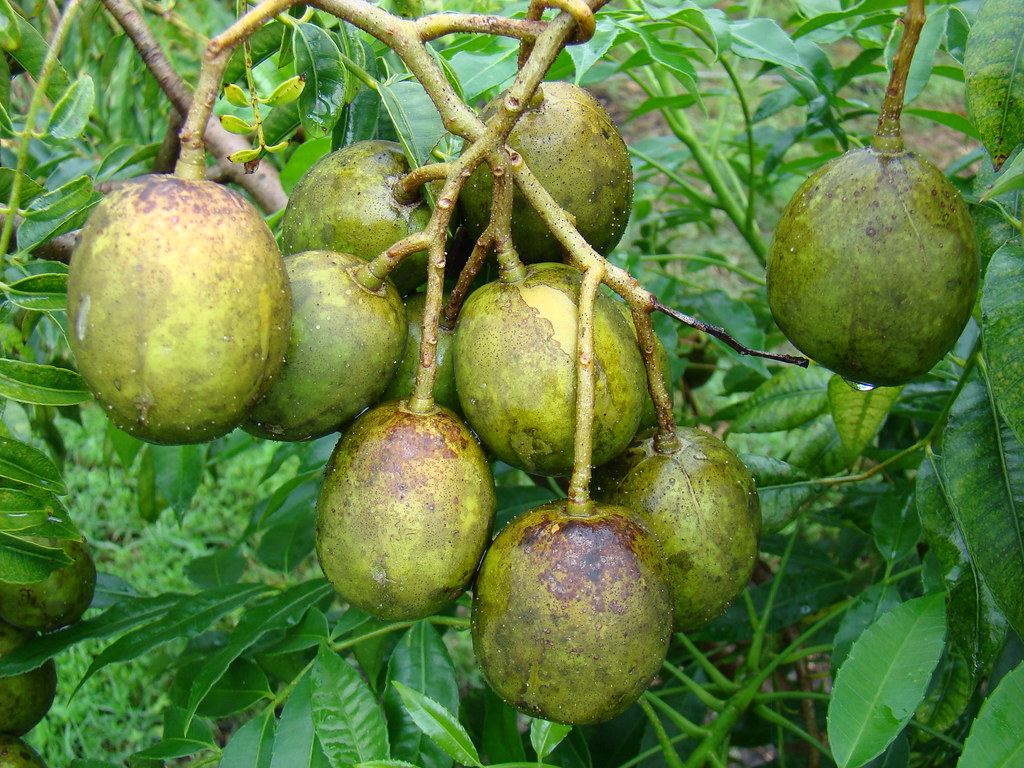
আমড়া (SPONDIAS PINNATA)

ORIGIN
Spondias pinnata is a tropical fruit tree in the cashew family (Anacardiaceae).
Native range is debated — some sources cite the Philippines and Indonesia as original native regions while others consider South Asia (India, Bangladesh) as a center of origin.
Today it is widely naturalized throughout South Asia, Southeast Asia, Southern China, and Pacific islands.
TAXONOMY
Kingdom: Plantae
Clade: Angiosperms → Eudicots
Order: Sapindales
Family: Anacardiaceae (cashew/sumac family)
Genus: Spondias
Species: Sondias pinnata (L.f.) Kurz
Synonyms include Spondias mangifera Willd. and Mangifera pinnata L.f. (an older classification). NATURE INFO
EVOLUTION
Spondias is a genus of about 17–18 described species distributed across the Neotropics and tropical Asia.
These species share a common evolutionary lineage within the Anacardiaceae, a family adapted to tropical and subtropical ecosystems.
They are distinctly separate from true mangoes (Mangifera) despite superficial fruit similarities.
DESCRIPTION
Tree
Medium to large deciduous tree, typically 8–15 m tall, sometimes up to 25–27 m.
Smooth, grayish bark often exudes a clear resinous sap.
Leaves
Pinnate leaves with 5–11 leaflets; leaflets elliptic to oblong, glabrous, sometimes serrate.
Flowers
Small, white, polygamous flowers arranged in terminal panicles.
Fruit
Drupe-shaped, olive green to yellow/orange at maturity.
Sour, astringent pulp with usually 1–3 seeds surrounded by a fibrous endocarp.
ECOLOGY
Grows in lowland and hill forests up to ~1200–1500 m altitude.
Tolerant of a range of habitats — from moist deciduous to drier sites.
Flowers are insect-pollinated; fruits may be dispersed by birds and bats in wild settings.
CULTIVATION
Propagation
Can be grown from seed, cuttings, or air layering.
Best direct sowing with depulped fruits for seedling establishment.
Growing Conditions
Warm tropical climate; prefers well-drained soils but adaptable.
Coppices well and tolerates some disturbance in traditional agroforestry systems.
Cultivation Centers
India (Western Ghats, eastern hills), Bangladesh, Sri Lanka, Southeast Asia, and parts of China and Solomon Islands.
TRADITIONAL USES
Culinary
Green fruits are eaten raw with seasonings or used to make chutneys, pickles, jams, and sauces.
In the Philippines, leaves and fruits are used as a souring agent in dishes like sinigang.
Folk Medicine
Used to support digestion, treat dyspepsia, diarrhea, and as an antiscorbutic (vitamin C source).
Bark and leaf decoctions applied externally for earache, wounds, and joint pain in village traditions.
MEDICINAL USES
Bioactive Components
Rich in flavonoids, tannins, phenolic acids, saponins, and essential oils with monoterpenes and sesquiterpenes such as α-pinene and caryophyllene.
Pharmacological Activities
Scientific studies (ethnobotanical and laboratory-based) suggest:
Antioxidant and free radical scavenging properties.
Anti-diabetic/hypoglycemic activity (leaf extracts studied in animal models).
Antimicrobial, anti-inflammatory, anticancer, anti-diarrhoeal, anthelmintic and hepatoprotective potentials reported in reviews.
RESEARCH
Rich in antioxidants – Fruit, bark, and leaves contain high levels of phenolics and flavonoids that show strong free-radical scavenging activity.
Antibacterial properties – Leaf and bark extracts inhibit both Gram-positive and Gram-negative bacteria in laboratory studies.
Anti-inflammatory effects – Extracts show membrane-stabilizing activity, supporting traditional use against pain and inflammation.
Antidiabetic potential – Animal studies indicate hypoglycemic effects, likely due to flavonoids and saponins.
Antihyperlipidemic action – Fruit extracts reduce cholesterol, triglycerides, LDL, and VLDL in experimental models.
Anticancer activity – Bark extracts induce apoptosis in human cancer cell lines (lung and breast) with some selectivity.
Antimalarial effects – Seed extracts suppress Plasmodium infection in mice and increase survival time.
Hepatoprotective role – Leaf extracts protect liver tissue from drug-induced oxidative damage in rats.
Low acute toxicity – Animal toxicity studies show no major adverse effects at therapeutic and high doses.
Research gap – Most evidence is preclinical; human clinical trials and compound isolation studies are still limited.
BIOLOGY
Reproductive Biology
Flowers bloom seasonally; typically fruiting follows the flowering period with seeds capable of germinating after dormancy.
Chromosome number documented as 2n = 32 in Spondias pinnata.
Physiology
Deciduous behavior supports survival in seasonal climates with leaf drop during dry periods and flush of new growth afterward.
TOXICITY
While widely consumed and used traditionally, scientific safety data is limited.
As with many Anacardiaceae members, some individuals may have sensitivity to resins/saps.
Reported side effects in pharmacological literature are rare but comprehensive toxicology studies (especially chronic effects) remain insufficient in modern research.
CONCLUSION
Spondias pinnata (আমড়া) is a valuable tropical fruit tree with multiple roles — culinary, cultural, and medicinal — in South and Southeast Asia.
Botanically interesting as a member of the Anacardiaceae, it bridges the gap between traditional ethnobotany and emerging scientific validation of health benefits.
Continued research is needed on pharmacological mechanisms and safety profiles to fully harness its therapeutic potential.