
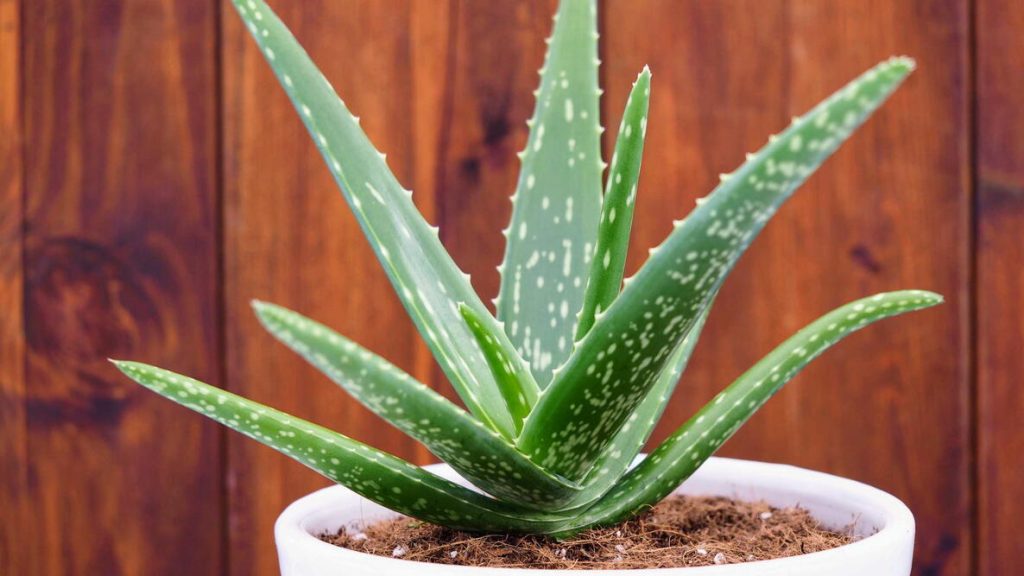
ঘৃতকুমারী (ALOE VERA)


ORIGIN
Aloe vera is believed to have originated in the Arabian Peninsula and later spread naturally and through cultivation to North Africa, the Mediterranean region, South Asia, and the Americas. Today, it is cultivated worldwide in tropical and subtropical regions due to its medicinal and commercial value.
TAXONOMY
Kingdom: Plantae
Clade: Angiosperms → Monocots
Order: Asparagales
Family: Asphodelaceae
Genus: Aloe
Species: Aloe vera (L.) Burm.f.
Synonyms include Aloe barbadensis Miller.
EVOLUTION
Aloe vera evolved as a succulent plant adapted to arid and semi-arid environments. Key evolutionary adaptations include water-storing leaves, thick cuticles, and CAM (Crassulacean Acid Metabolism) photosynthesis, which reduce water loss and allow survival under drought conditions.
DESCRIPTION
Aloe vera is a short-stemmed perennial succulent.
Leaves: Thick, fleshy, lance-shaped, green to gray-green with serrated margins
Gel: Clear, mucilaginous inner pulp rich in bioactive compounds
Flowers: Yellow or orange tubular flowers arranged on tall spikes
Roots: Fibrous and shallow
ECOLOGY
The plant grows best in dry, warm climates.
Highly drought-tolerant
Prefers sunny locations
Poor tolerance to frost and waterlogging
Supports pollinators such as bees and birds during flowering
CULTIVATION
Aloe vera is widely cultivated both commercially and domestically.
Propagation: Offsets (pups) and suckers
Climate: Tropical to subtropical
Soil: Well-drained sandy or loamy soil
Water: Minimal; overwatering causes root rot
Harvesting usually begins 8–12 months after planting.
TRADITIONAL USES
Traditionally, Aloe vera has been used for:
Treating burns, wounds, and skin infections
Improving digestion and bowel movement
Hair and scalp care
Cosmetic applications for skin hydration
It has been used in Ayurveda, Unani, Chinese, and folk medicine systems.
MEDICINAL USES
Medically, Aloe vera is known for:
Wound healing and burn treatment
Anti-inflammatory and antimicrobial effects
Laxative action (from aloe latex, used cautiously)
Supporting immune function and digestive health
Aloe gel is widely used in pharmaceuticals, cosmetics, and nutraceuticals.
RESEARCH
Scientific research has identified:
Bioactive compounds: Aloin, aloe-emodin, polysaccharides (acemannan), vitamins, enzymes, and amino acids
Pharmacological activities:
Antioxidant
Antimicrobial
Anti-inflammatory
Antidiabetic
Wound-healing and skin regeneration
Clinical studies support its topical use, while oral use requires controlled dosage.
BIOLOGY
Life form: Perennial succulent
Photosynthesis: CAM pathway
Reproduction: Vegetative propagation mainly; flowering is seasonal
Growth habit: Rosette-forming with continuous leaf regeneration
TOXICITY
Aloe vera is generally safe when used topically.
Oral use of aloe latex can cause abdominal cramps, diarrhea, and electrolyte imbalance
Long-term or excessive ingestion may be harmful
Not recommended for pregnant women and children without medical supervision
CONCLUSION
Aloe vera (Ghritkumari) is one of the most important medicinal plants globally, valued for its therapeutic, cosmetic, and commercial applications. Its traditional uses are strongly supported by modern scientific research, particularly for skin and wound care. However, proper processing, dosage control, and clinical supervision are essential to ensure safety, especially for internal use.