
আকন্দ (CALOTROPIS GIGANTEA)

ORIGIN
Calotropis gigantea is native to South Asia and Southeast Asia, including Bangladesh, India, Sri Lanka, Myanmar, Thailand, and Indonesia. It naturally grows in dry, open landscapes and has spread widely across tropical and subtropical regions due to its high environmental tolerance.
TAXONOMY
Kingdom: Plantae
Clade: Angiosperms → Eudicots
Order: Gentianales
Family: Apocynaceae
Genus: Calotropis
Species: Calotropis gigantea (L.) Dryand.
The plant belongs to the milkweed subfamily and is closely related to Calotropis procera.
EVOLUTION
Calotropis gigantea evolved adaptive traits such as milky latex, toxic secondary metabolites, thick leaves, and deep roots, enabling survival in arid and disturbed habitats. These traits provide protection against herbivores and environmental stress, reflecting evolutionary specialization within the Apocynaceae family.
DESCRIPTION
Calotropis gigantea is a perennial shrub or small tree, usually 2–4 meters tall.
Stem: Woody, branched, containing milky latex
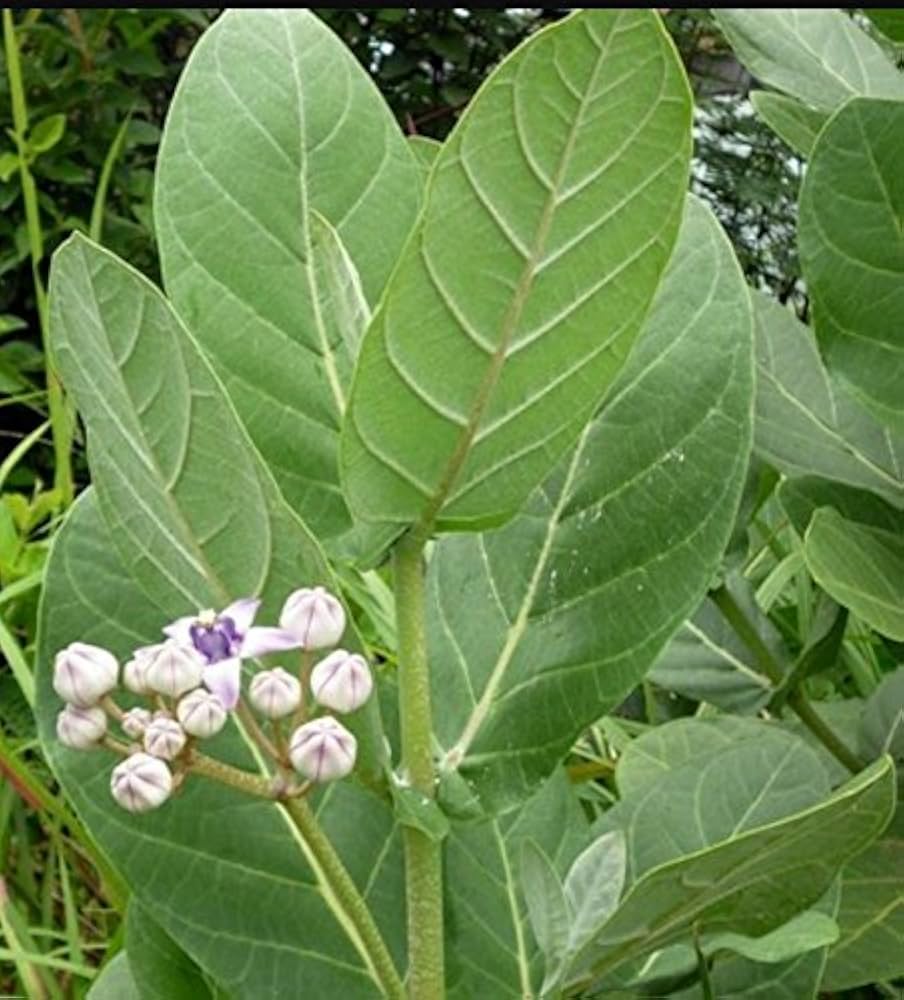
Leaves: Large, opposite, ovate, thick, gray-green
Flowers: Showy, waxy, star-shaped; white, lavender, or bluish-purple
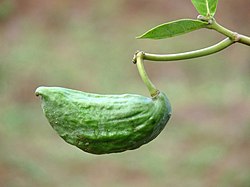
Fruit: Inflated follicle containing flat seeds with silky hairs for wind dispersal
ECOLOGY
The plant thrives in dry, sandy, saline, and degraded soils.
Highly drought-resistant
Pollinated mainly by insects
Seeds dispersed by wind
Acts as a pioneer species in disturbed ecosystems
CULTIVATION
Calotropis gigantea is rarely cultivated intentionally but grows easily when required.
Propagation: Seeds or stem cuttings
Climate: Hot tropical to subtropical
Soil: Poor, sandy, or alkaline soils
Water requirement: Minimal
It requires little maintenance and is highly resilient.
TRADITIONAL USES
Traditionally, Akanda has been used for:
Heating leaves and applying them to swollen joints and body pain
Using flowers in religious rituals, especially in Hindu worship
Fibers from bark used in making ropes and stuffing materials
MEDICINAL USES
In traditional medicine systems (Ayurveda, Unani, folk medicine):
Latex used externally for warts, corns, and skin diseases
Leaves used for pain, inflammation, and respiratory disorders
Root bark used for digestive disorders, fever, and asthma
⚠️ Internal use requires caution due to toxicity.
RESEARCH
Scientific studies have identified:
Phytochemicals: Cardiac glycosides (calotropin, uscharin), flavonoids, alkaloids, triterpenoids
Pharmacological activities:
Anti-inflammatory
Antimicrobial
Analgesic
Anticancer (in vitro and animal models)
Antioxidant
Most research is preclinical, with limited human clinical evidence.
BIOLOGY
Life form: Perennial shrub
Reproduction: Sexual (seeds) and vegetative
Latex production: Continuous, acts as chemical defense
Adaptations: Thick cuticle, reduced water loss, deep root system
TOXICITY
Calotropis gigantea is toxic if misused.
Latex can cause skin irritation and eye damage
Cardiac glycosides may affect heart rhythm
Ingestion of raw plant parts can be dangerous
Not recommended for children, pregnant women, or unsupervised medicinal use
CONCLUSION
Calotropis gigantea (Akanda) is a medicinally important yet potentially toxic plant with strong ecological adaptability. Traditional knowledge and modern research both highlight its pharmacological potential. However, due to its toxicity, scientific validation, dosage standardization, and clinical studies are essential before safe therapeutic use can be widely recommended.