
নয়নতারা (CATHARANTHUS ROSEUS)
ORIGIN
নয়নতারা originates from Madagascar, although it is now widely cultivated in tropical and subtropical regions of the world. It has spread to many countries and is often used as an ornamental garden plant due to its bright, attractive flowers and resilience to heat and drought.
TAXONOMY
- Kingdom: Plantae
- Clade: Angiosperms
- Clade: Eudicots
- Order: Gentianales
- Family: Apocynaceae
- Genus: Catharanthus
- Species: C. roseus
EVOLUTION
নয়নতারা belongs to the Apocynaceae family, which is one of the largest families of flowering plants, encompassing around 4000 species. The genus Catharanthus is a relatively small genus within this family, and C. roseus is the most well-known species. The plant has evolved to thrive in warm, tropical climates and has developed specialized mechanisms for drought tolerance, such as thick, leathery leaves and deep root systems.
The plant’s evolution is also marked by its medicinal properties, which may have developed as a secondary defense mechanism against herbivores. The presence of alkaloids in the plant is thought to play a role in deterring herbivores.
DESCRIPTION
- Height: 0.3 to 1 meter (1 to 3 feet)
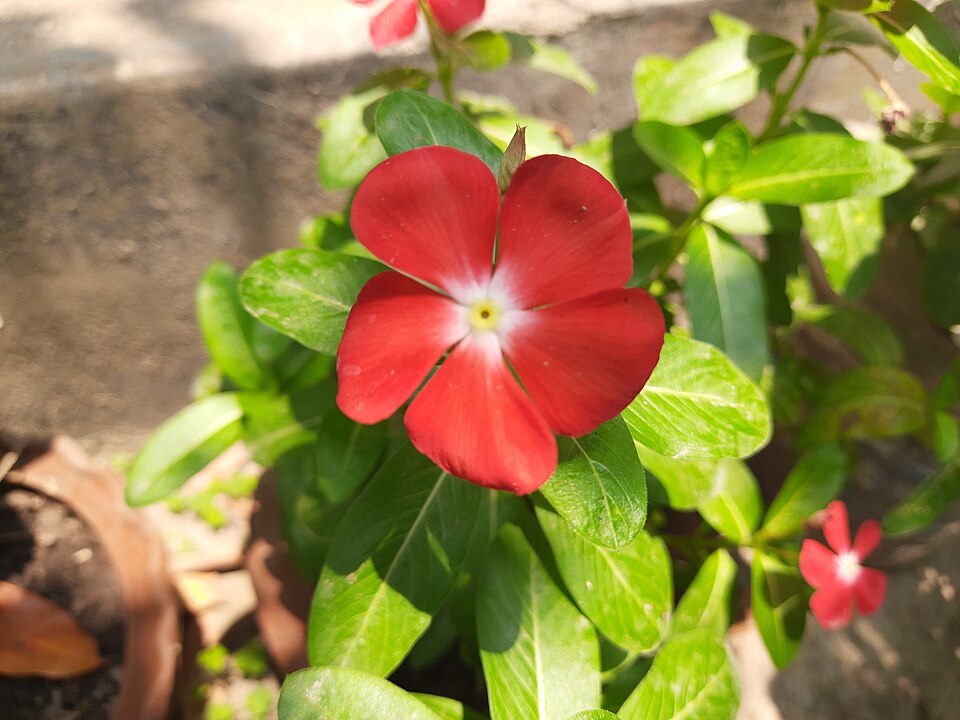
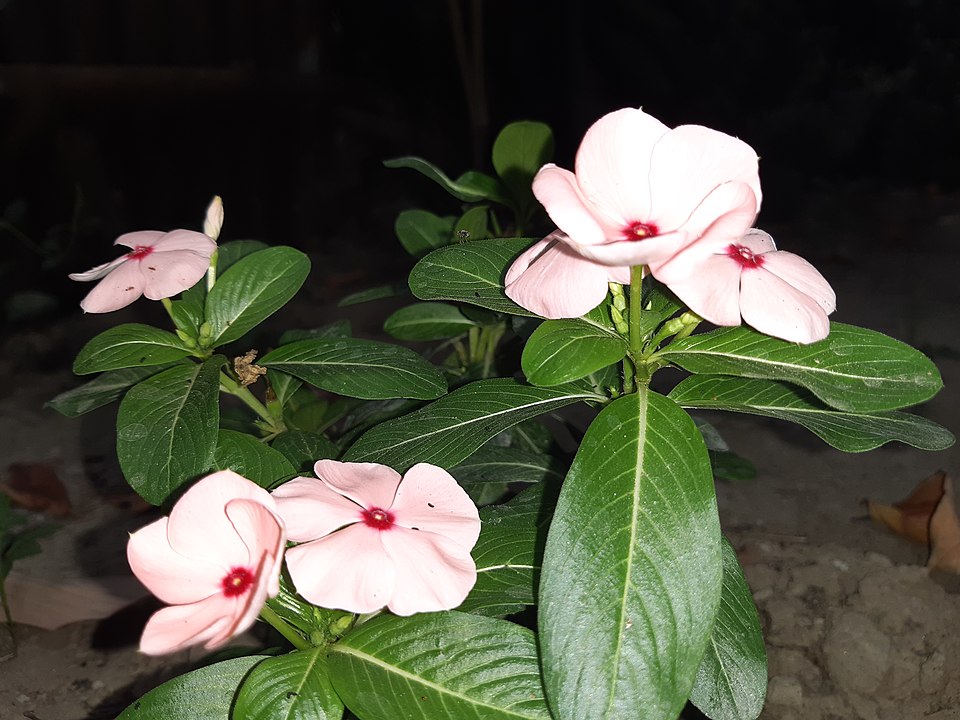
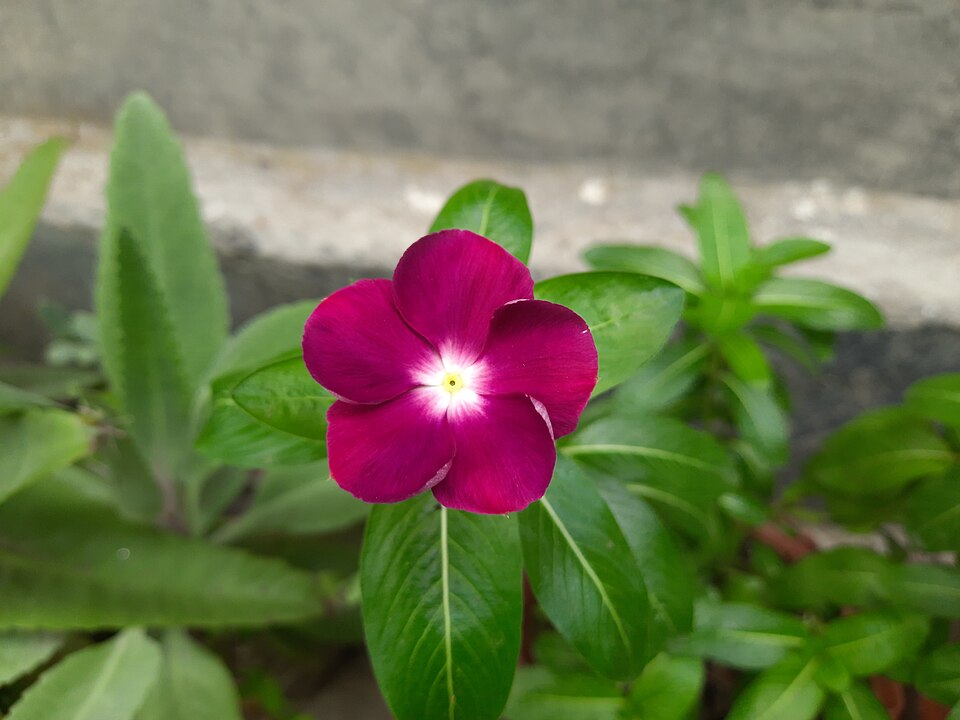
- Leaves: Dark green, shiny, oval-shaped, and arranged in pairs along the stem.
- Flowers: Five-petaled, funnel-shaped flowers, often pink, purple, or white with darker centers.
- Stem: Typically erect or spreading, with a woody base.
- Fruit: A long, narrow capsule containing seeds.
The plant blooms profusely and is popular for its ornamental value, especially in hanging baskets or as ground cover in tropical gardens.
ECOLOGY
- Habitat: C. roseus thrives in tropical and subtropical climates and is commonly found in regions with well-drained soil and plenty of sunlight. It is highly drought-tolerant, making it suitable for arid regions.
- Pollination: The flowers are pollinated by insects, particularly bees, attracted to their nectar.
- Growth Conditions: Prefers full sunlight but can tolerate partial shade. It is a hardy plant that is resistant to most pests, though it can suffer from fungal diseases in wet conditions.
CULTIVATION
- Soil: Well-drained, sandy loam or sandy soil is ideal.
- Watering: Requires moderate watering; it is drought-tolerant but grows best with consistent moisture.
- Temperature: Thrives in warm, tropical climates with temperatures between 20°C to 30°C (68°F to 86°F). It can withstand brief cold spells but is not frost-tolerant.
- Propagation: Primarily propagated through cuttings or seeds. Seeds are small and require light for germination.
- Pests and Diseases: C. roseus is relatively resistant to pests but can be affected by fungal infections, such as downy mildew or root rot in overly wet conditions.
TRADITIONAL USES
- Ornamental Use: C. roseus is widely cultivated as an ornamental plant in gardens due to its vibrant flowers.
- Cultural Significance: In some cultures, it is used in folk medicine, especially in Madagascar where it is native. The plant is also used in traditional rituals and as an offering in some areas.
MEDICINAL USES
C. roseus has a long history of medicinal use, particularly for its alkaloid content. The plant produces several alkaloids that are valuable in the treatment of various diseases. Its medicinal uses are primarily derived from the leaves and stems.
Alkaloids:
- The plant contains more than 130 alkaloids, the most important of which are vincristine and vinblastine. These compounds have potent anti-cancer properties and are used in chemotherapy regimens to treat a variety of cancers, including leukemia, Hodgkin’s lymphoma, and non-Hodgkin’s lymphoma.
- Vincristine and vinblastine work by interfering with the ability of cancer cells to divide, thereby slowing down or halting tumor growth.
Other Uses:
- Traditional uses also include treatment for diabetes, hypertension, and gastrointestinal disorders.
- Some herbalists use it as a remedy for wounds, fevers, and as an astringent.
Note: The plant is highly toxic if consumed inappropriately, so any medicinal use should be supervised by a healthcare professional.
RESEARCH
Extensive research has been conducted on Catharanthus roseus, particularly due to its role in cancer treatment. The discovery of vincristine and vinblastine was a milestone in cancer pharmacology, and ongoing research aims to improve the yield of these alkaloids and reduce the side effects of chemotherapy.
- Biotechnological Advancements: Research into increasing the production of vincristine and vinblastine has led to the development of biotechnological approaches, such as using plant cell cultures and genetic engineering to enhance alkaloid production.
- New Discoveries: Researchers continue to study the lesser-known alkaloids in the plant for potential use in treating other conditions, such as malaria and autoimmune diseases.
BIOLOGY
- Chemical Composition: In addition to vincristine and vinblastine, Catharanthus roseus contains several other bioactive compounds, such as ajmalicine and serpentine. These compounds have been studied for their potential pharmacological effects, including anti-hypertensive and anti-arrhythmic properties.
- Photosynthesis: Like most plants, C. roseus uses photosynthesis to convert light energy into chemical energy. It has a relatively efficient system for capturing light in tropical environments, where sunlight is abundant.
- Secondary Metabolism: The plant is known for its secondary metabolites, including alkaloids, which are synthesized through complex biochemical pathways. These compounds often serve as defense mechanisms against herbivores and pathogens but also provide significant therapeutic benefits to humans.
TOXICITY
Toxicity: Despite its medicinal value, Catharanthus roseus is toxic when ingested in large quantities. The alkaloids, especially vincristine and vinblastine, can cause severe poisoning and death if not carefully administered.
- Symptoms of poisoning include nausea, vomiting, diarrhea, hypotension, and central nervous system effects.
- The plant is also toxic to animals. If consumed, it can cause severe gastrointestinal distress and even death in livestock or pets.
CONCLUSION
নয়নতারা is a remarkable plant with both medicinal and ornamental value. Its history of use in cancer treatment through the alkaloids vincristine and vinblastine has made it a cornerstone in chemotherapy. However, due to its toxicity, it requires careful handling and should only be used under medical supervision. With continued research, C. roseus may continue to contribute to the development of new treatments for cancer and other diseases.