
অশোক (SARACA ASOCA)


ORIGIN
Saraca asoca is native to the Indian subcontinent, including India, Bangladesh, Sri Lanka, Nepal, and Myanmar. It naturally grows in tropical evergreen and semi-evergreen forests, particularly along riverbanks and moist lowland areas.
TAXONOMY
Kingdom: Plantae
Clade: Angiosperms → Eudicots
Order: Fabales
Family: Fabaceae (subfamily: Caesalpinioideae)
Genus: Saraca
Species: Saraca asoca (Roxb.) De Wilde
It is sometimes confused with Polyalthia longifolia, which is incorrectly called “false Ashoka.
EVOLUTION
Saraca asoca evolved as a shade-loving forest tree, developing adaptations such as evergreen foliage, shallow but spreading roots, and bioactive secondary metabolites. These traits support survival in moist forest ecosystems and provide chemical defense against pests and pathogens.
DESCRIPTION
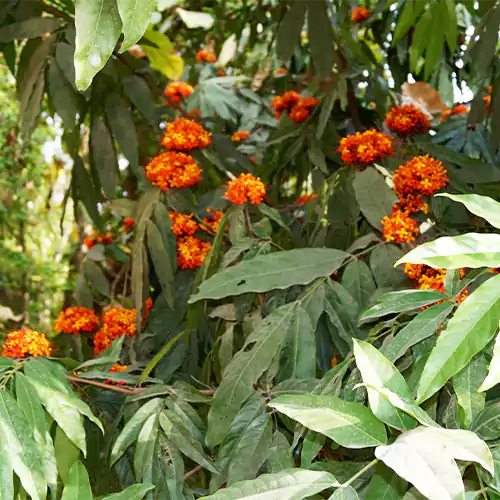
Saraca asoca is an evergreen, medium-sized tree, typically growing 6–10 meters tall.
Bark: Dark brown to grey, rough, medicinally valuable
Leaves: Compound, pinnate, glossy green, young leaves coppery-red
Flowers: Dense clusters of fragrant, orange to red flowers
Fruit: Flat, leathery pods containing several seeds
The tree is renowned for its ornamental and cultural beauty.
ECOLOGY
The Ashoka tree thrives in humid tropical environments.
Prefers moist, well-drained soil
Pollinated mainly by insects
Seeds dispersed by gravity and animals
Provides nectar and shelter for insects and birds
It plays a role in maintaining forest biodiversity.
CULTIVATION
Saraca asoca is cultivated both ornamentally and medicinally.
Propagation: Seeds
Climate: Tropical and subtropical
Soil: Fertile, well-drained loamy soil
Water requirement: Moderate to high
Due to overharvesting, cultivation is encouraged to conserve wild populations.
TRADITIONAL USES
Traditionally, Ashoka has been used for:
Religious and cultural ceremonies, especially in Hindu and Buddhist traditions
Ornamental planting in gardens and temples
Classical Ayurvedic formulations
It symbolizes love, fertility, and sorrowlessness.
MEDICINAL USES
In Ayurveda and traditional medicine:
Bark used extensively in gynecological disorders (menorrhagia, dysmenorrhea)
Used for uterine tonic and hormonal balance
Helpful in bleeding disorders and inflammation
Also used for digestive and skin disorders
RESEARCH
Scientific studies have identified:
Phytochemicals: Flavonoids, tannins, glycosides, saponins, sterols
Pharmacological activities:
Estrogenic and uterine tonic effects
Anti-inflammatory
Antioxidant
Antimicrobial
Anticancer (preclinical studies)
Most research is in vitro and animal-based, with limited clinical trials.
BIOLOGY
Life form: Evergreen tree
Reproduction: Sexual reproduction via seeds
Flowering: Seasonal, often before new leaf growth
Growth habit: Slow to moderate growth
TOXICITY
Saraca asoca is considered safe when used in traditional therapeutic doses.
Excessive bark use may cause gastrointestinal discomfort
Unsustainable bark harvesting can kill the tree
Use under professional guidance is recommended
CONCLUSION
Saraca asoca (Ashoka Tree) is a culturally sacred and medicinally significant plant, especially valued in women’s health care. Traditional uses are supported by emerging scientific evidence, but conservation, sustainable harvesting, and further clinical research are essential to preserve this valuable species for future generations.